
Welcome to LexCall
Verified Legal Advisory Across India
India Rewrites the Rules of Work: Why the Labour Codes Were Inevitable—and Why They Matter Now
For decades, Indian labour law did not fail loudly. It failed quietly—through silence, complexity, and irrelevance. It existed in statute books, court pleadings, and compliance files, but rarely in the lived reality of most workers. Employers complied selectively, workers asserted rights sporadically, and courts were left to reconcile contradictions that the legislature itself never resolved.
Share on social media
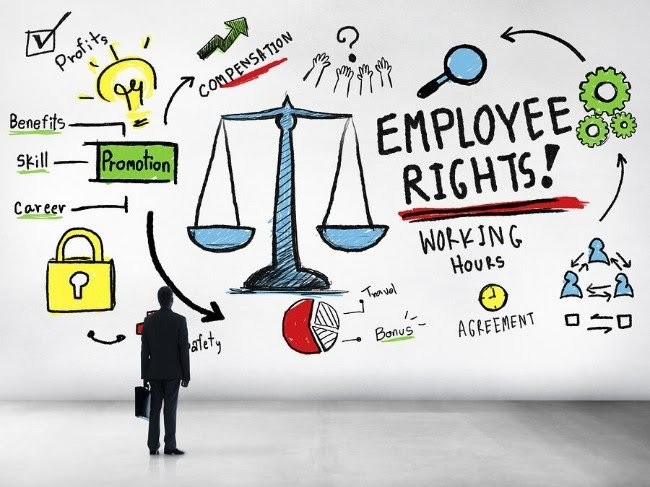
About India Rewrites the Rules of Work: Why the Labour Codes Were Inevitable—and Why They Matter Now
The enforcement of the four Labour Codes on 21 November 2025 marks not a sudden reform, but an overdue confession: the law governing work in India had fallen out of sync with the way India actually works.
This moment is not dramatic. It is structural. And structural changes, while less visible, are far more consequential.
Why Reform Was No Longer a Choice
India’s earlier labour regime was built on 29 central laws drafted across different decades, for different industries, and for a vastly different economy. These laws were not merely old; they were internally inconsistent. Definitions of “wages” varied across statutes. Thresholds for applicability changed without logic. Compliance depended less on legality and more on geography.
Ironically, a framework designed to protect workers ended up excluding the majority of them. Informal labour, gig work, platform employment, fixed-term contracts, and inter-state migration flourished outside legal recognition. What could not be defined could not be protected.
At the same time, employers faced a compliance ecosystem so fragmented that formalisation itself became risky. Litigation often turned on technicalities rather than substance. Enforcement became procedural, not protective.
The Labour Codes emerged not as ideological reform, but as an administrative necessity. When a law becomes too complex to comply with honestly, reform becomes inevitable.
A Short History of a Long Delay
Indian labour law after Independence was deeply protective, reflecting a post-colonial anxiety about worker exploitation. The focus was security, permanence, and state oversight. This model survived liberalisation in 1991, even as the economy transformed around it.
From the early 2000s onwards, committee after committee recommended consolidation. None succeeded politically. Labour reform remained the most sensitive legislative terrain—caught between electoral caution and economic pressure.
When Parliament finally passed the four Labour Codes between 2019 and 2020, their enforcement was delayed for nearly five years. This delay was not administrative incompetence; it was political negotiation. States had to align rules. Stakeholders had to be heard. Resistance had to be managed.
The 2025 enforcement reflects a consensus not that the Codes are perfect—but that the old system was unsustainable.
The Four Codes: What Actually Changed (Beyond the Headlines)
Wages: Ending Legal Fiction
The Code on Wages does something deceptively radical: it insists on honesty. By defining wages uniformly and mandating that at least half of total remuneration be treated as wages, it dismantles salary structures designed to minimise statutory liabilities.
This change directly affects provident fund contributions, gratuity, bonuses, and long-term social security. The reform is not about increasing salaries overnight; it is about ensuring that what is paid today does not destroy tomorrow’s security.
In effect, the law has chosen substance over structure.
Industrial Relations: From Agitation to Architecture
The Industrial Relations Code has drawn the most criticism—and not without reason. By raising thresholds for government approval in layoffs and closures, it undeniably increases managerial flexibility. But this flexibility is paired with formal recognition of negotiating unions and structured dispute resolution.
The Code attempts to replace industrial confrontation with institutional dialogue. It does not eliminate strikes; it regulates them. It does not abolish unions; it professionalises representation.
The underlying shift is clear: the law no longer romanticises industrial conflict. It prefers predictability to protest.
Social Security: Recognition Before Rights
Perhaps the most transformative change lies in the Social Security Code—not because it delivers immediate benefits, but because it acknowledges previously invisible workers. Gig workers, platform workers, freelancers, and contract labour are now legally recognised categories.
This recognition creates the architecture for welfare funds, aggregator contributions, and benefit portability. While implementation will determine success, the jurisprudential shift is undeniable: exclusion through definition is no longer acceptable.
The law has finally learned that employment does not require an office.
Occupational Safety: From Apology to Obligation
The OSH Code unifies safety, health, and working conditions into a single framework. Its impact is particularly visible in sectors like IT, services, logistics, and construction—areas previously regulated lightly or inconsistently.
Mandatory health check-ups, inter-state migrant protections, women’s participation in night shifts with safeguards, and national licensing structures reflect a shift from reactive enforcement to preventative obligation.
Dignity at work is no longer assumed; it is regulated.
What We Are Already Seeing
Employers are restructuring compensation, issuing formal appointment letters, enrolling workers in social security schemes, and auditing compliance. States are notifying rules at varying speeds, creating a transitional phase that itself will generate litigation.
Most importantly, awareness is increasing. Workers are asking different questions. Employers are planning compliance rather than responding to inspections. The law has become a factor in decision-making, not an afterthought.
Recent Posts

Can a Democracy Survive if It's Own Exec...
Read More
When Roads Become Traps and Rivers Turn...
Read More
Poison in the Pump: India’s Hidden Urani...
Read More
Aravalli Hills: When a Hill Has to Measu...
Read More
Men’s Rights in India — Finally Getting...
Read More
Some Words Get FIRs. Some Get Standing O...
Read More
India Rewrites the Rules of Work: Why th...
Read More
When the Files Became Too Heavy: A Saket...
Read More
“The Role of Mediation and Arbitration i...
Read More
“Reduction of Eligibility for Judiciary...
Read More